
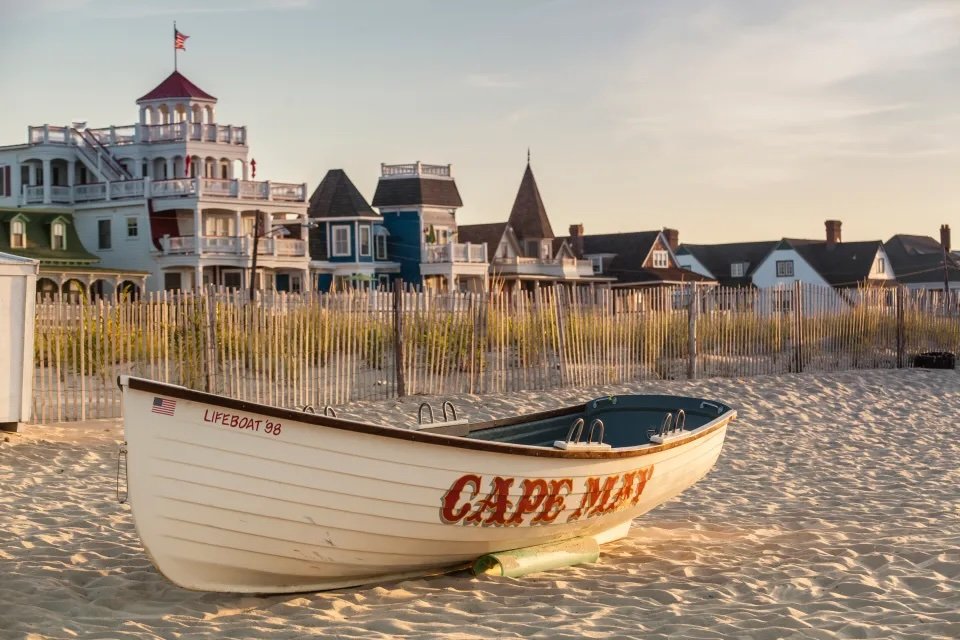
Cape May, New Jersey officially claims the title of "The Nation's Oldest Seashore Resort
The state of New Jersey, the federal government, and encyclopedias like Britannica all recognize Cape May as the pioneer of the American beach vacation.
The History Behind the Claim
The 18th-Century Origins: Cape May began attracting wealthy leisure travelers from Philadelphia as early as the mid-1760s. Visitors made the long, arduous journey by horse-drawn wagons, stagecoaches, and sloops to escape the oppressive summer city heat and enjoy the ocean breezes.
Continuous Tourism: “No other American coastal town can credibly claim an earlier, continuous history of purpose-built leisure tourism.”, as noted by Cape Del Mar.
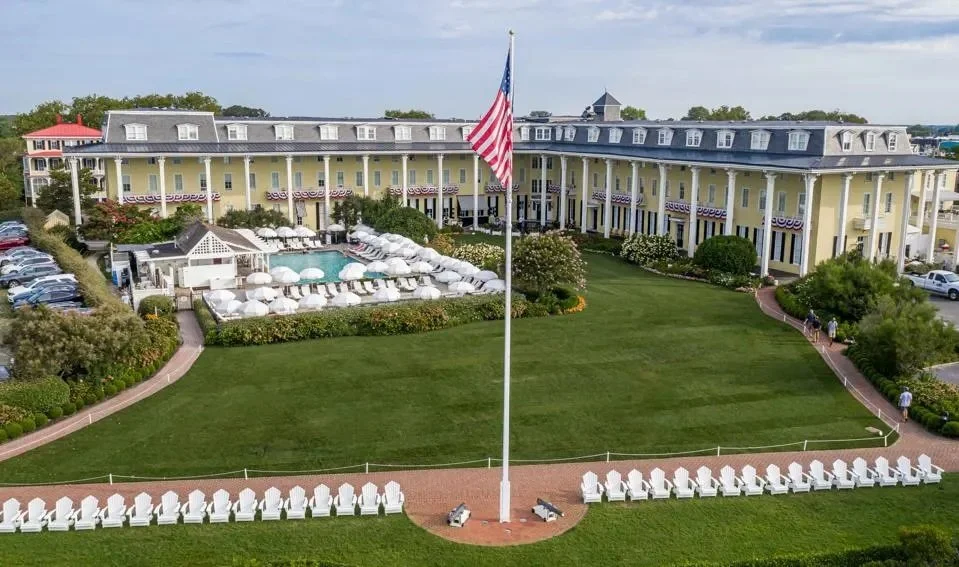
The First Hotel: In 1816, a local entrepreneur opened a grand boarding house that would later be named Congress Hall. It still stands today and proudly markets itself as "America's 1st Seaside Resort".
The Presidential Seal: By the mid-19th century, Cape May was the premier destination for the country's elite. It hosted at least seven sitting U.S. presidents—including Franklin Pierce, James Buchanan, Ulysses S. Grant, and Benjamin Harrison. Harrison even used Congress Hall as his official "Summer White House".
National Historic Landmark Status
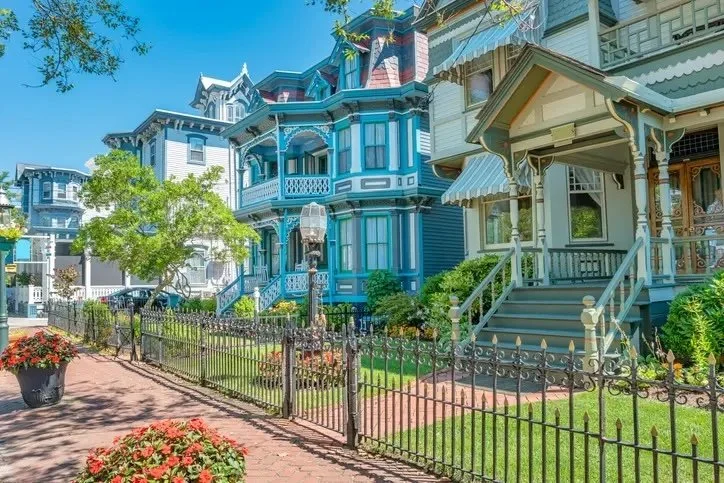
Because of a devastating fire in 1878, much of the town had to be rebuilt all at once, resulting in a massive concentration of late-Victorian architecture. On May 11, 1976, the entire city of Cape May was officially designated a National Historic Landmark District to preserve over 600 original Victorian buildings. It is one of the only cities in the United States wholly designated with this title.
Here is how ChatGPT describes living in Cape May in 1955 on our father’s likely $90/week — or maybe less. I don’t know for certain.
I can recall him having two jobs, including selling advertising for radio stations. Among others.
Somehow, just before he left us in 1961, he acquired a small taxi business. The biggest payday for that was picking up or dropping off Delaware Bay Pilots who lived in Phila and sometimes they would start in Cape May so they needed a ride here, other times just the opposite where the ship began in Phila and the pilot would get off in Cape May. It was big pay, like $50 and I accompanied mom who didn’t want to drive the distance alone.
In 1955, Cape May was not yet the carefully restored, fashionable destination it would become. It was an aging seaside town whose grand Victorian houses had lost much of their shine. Many were drafty, divided into apartments, or simply allowed to deteriorate because working families could not afford elaborate restoration. The summer visitors still came, but winters were quiet, businesses were seasonal, and much of the year-round economy revolved around the Coast Guard, fishing, hotels, restaurants, construction, household work, and small local stores. The Garden State Parkway had reached Cape May only the year before, beginning the change from an isolated shore town into an automobile destination. (Cape May New Jersey)
A salary of $90 a week—$4,680 a year—was actually a little above the national median family income of $4,400 in 1955. But with two parents and six children, it certainly would not have felt above average. The family could survive because rent was modest, the house was probably small and imperfect, and the normal standard of living involved far fewer recurring expenses. There were no cable, Internet, cellular-phone, streaming, software, daycare, or multiple-car payments. Medical care and insurance consumed much less of the household budget, although families also had less protection when serious illness struck. The family may have had one used car, driven until it could no longer be repaired, with the father or a neighbor performing much of the maintenance. (Census.gov)
Feeding eight people required discipline and an enormous amount of work, usually performed by the mother. Meals were prepared at home from basic ingredients: potatoes, bread, beans, macaroni, soups, eggs, seasonal vegetables, inexpensive cuts of meat, and whatever fish could be obtained locally. Leftovers became the following day’s lunch, and eating in a restaurant was a genuine occasion. In the mid-1950s, American families with three or more members commonly spent about one-third of their income on food. Clothes were patched, altered, and handed down from one child to another; shoes were repaired rather than replaced; and school supplies, Christmas presents, and unexpected car repairs had to be planned for carefully. (Project Gutenberg)
Life was materially modest, but the children probably experienced more freedom than children do today. They walked to school or around town, played outdoors with siblings and neighborhood children, rode bicycles, explored the beaches, and returned home when called or when the streetlights came on. With six children, privacy would have been scarce: bedrooms were shared, baths were scheduled, noise was constant, and everyone was expected to contribute. Older children watched younger ones, carried groceries, washed dishes, tended the furnace, mowed grass, or helped with laundry. Family life was less organized around paid entertainment and more around school, church, neighbors, radio, an occasional television program, and whatever adventures children could invent for themselves.
It would be wrong to describe such a life as easy. One salary left almost no margin for unemployment, illness, or a major household repair, and much of the apparent affordability rested on unpaid domestic labor, relentless thrift, and expectations far below those of today. Yet $90 a week could support a family because the surrounding society was built around a simpler definition of sufficiency: a rented roof, enough food, one serviceable car, clean clothing, and children cared for at home. Your parents were not living luxuriously, but neither were they performing an economic miracle. They were living the demanding, crowded, resourceful life of a large, lower-middle-class American family in a Cape May that was still more working town than tourist treasure.