
1955 - 1967 Cape May NJ
Why did the Jean & Tom Hess family move from Williamsport PA to Cape May NJ? Our father had a congenital kidney failure, one of two removed before he was 25. The doctors at that time had no solution and dialysis treatment was 15-years away. (I remember when it became available, it was $25k to start and $25k to continue. Our father earned $5k/year - max.) So the doc said “You might have a longer life if you moved to a desert or the seashore. The Atlantic was 1500-miles closer, so off we went. More on this story later.
Here is how AI describes it: In 1955, Cape May was an aging seaside resort, not yet the carefully restored Victorian destination it would become. The Garden State Parkway had opened in 1954, making the town easier to reach, but Cape May was approaching a period when its old buildings increasingly looked shabby rather than charming, and vacationers favored more modern resorts such as Wildwood and Ocean City. Its architectural revival still lay ahead. For your parents, however, the seashore offered something more urgent than a holiday: hope for your father’s health and a place to begin again with five children.
As you remember it, that beginning was in the Carriage House at 1048 Washington Street, on the neglected Physick Estate. The estate’s own history confirms that it had fallen into serious disrepair before its eventual rescue and restoration; your recollection places a young family inside that history, when the property was shelter rather than a landmark. The rent may have been very low, but ice forming in an undrained bathtub speaks plainly about the conditions. Your father’s produce job at the nearby Acme, despite his illness and lack of a high-school diploma, helped keep the household going. Your clearest distinction is an important one: you were poor, but you do not remember ever being hungry. Spending money was another matter—if the children wanted some of their own, they worked for it.
Yet the Cape May of your childhood also offered continuity and belonging. School was a few blocks away, and the children you knew there remained the children you eventually graduated with. The nearby First Methodist Church—still standing on Washington Street, where the Methodist congregation had worshipped since 1854—gave you another place in that small community, serving at the altar and singing in the choir. Your parents were not religious, and perhaps sending the children to church gave them a few hours’ respite; that remains your affectionate speculation rather than something we can know. What emerges is a childhood that was materially spare but rooted: a cold house, enough food, work for extras, familiar faces, and parents trying to keep a growing family together under the shadow of your father’s illness.
I lived in Cape May until the fall of 1966. We moved 5 or 6 times during that 10-years. Renting. All we needed to know: 1) Don’t be late for dinner; 2) If you give lip across town, the old man would be waiting with a belt by the time you got home.
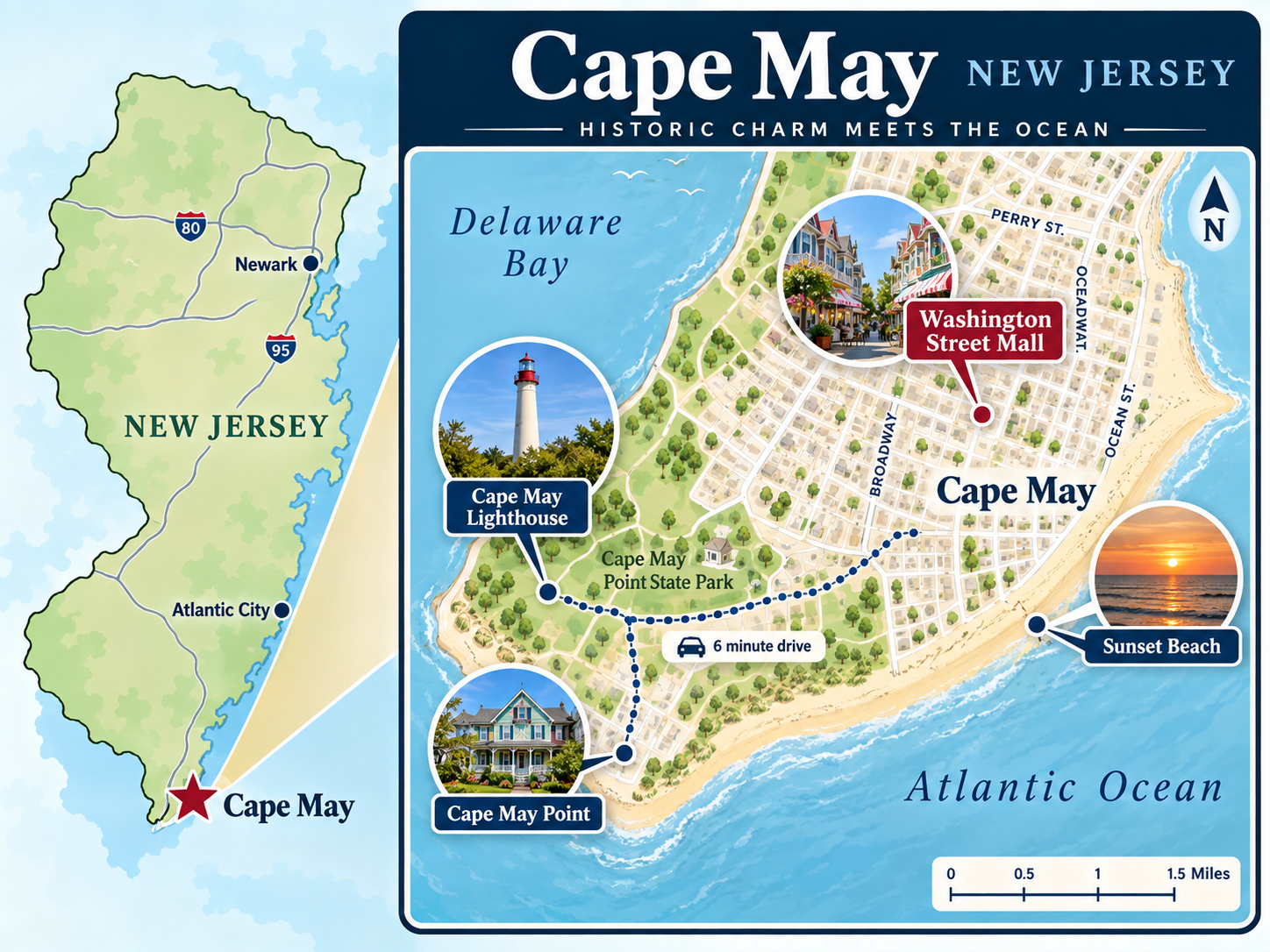
Exit-0 on the Garden State Parkway - an "island" with Delaware Bay, Atlantic Ocean, and in inland canal surrounding.
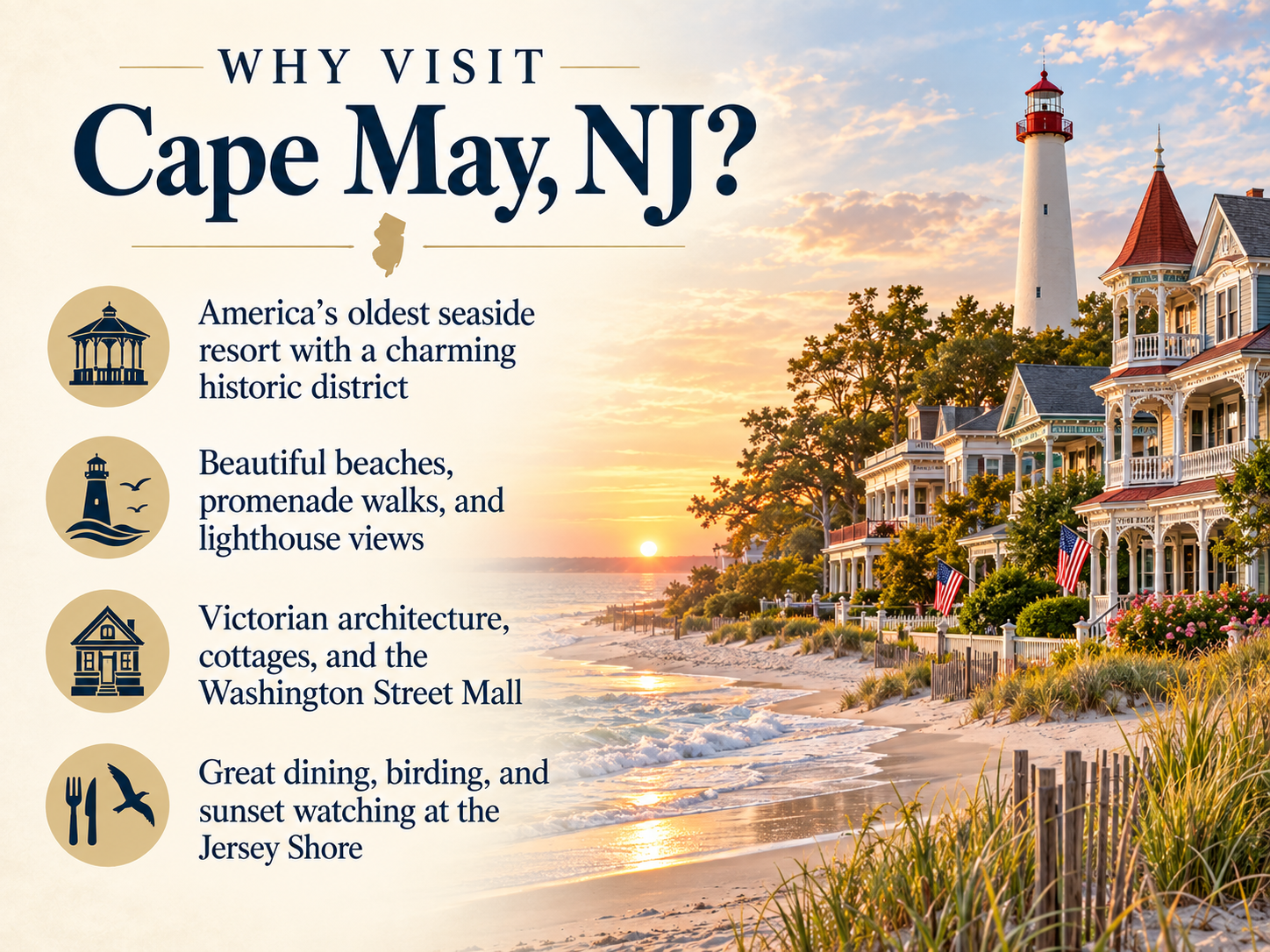
Cape May is now a $350/night kind of place
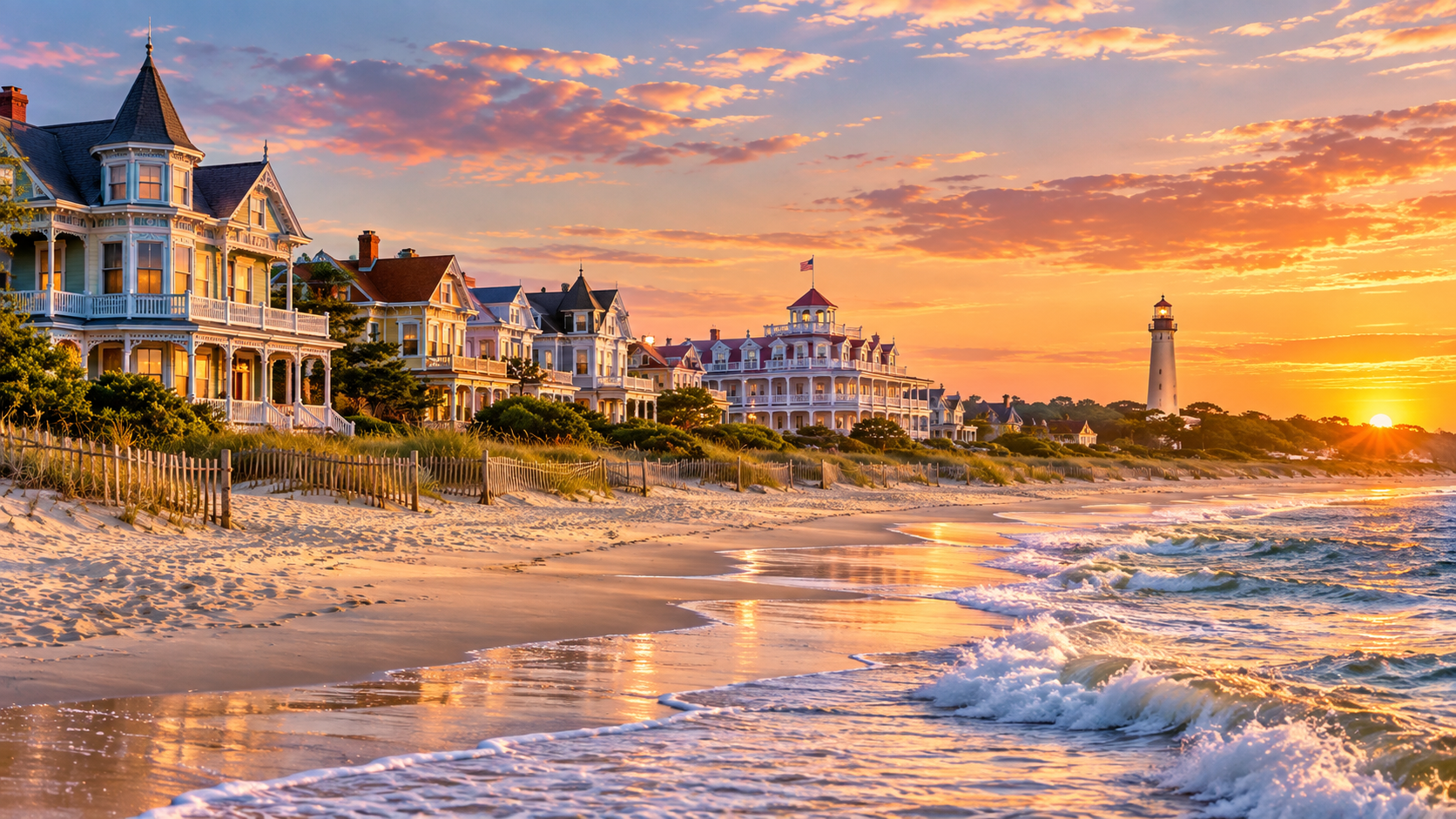
Cape May 2025 - beaches are all that matters
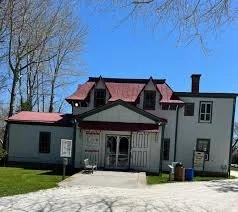
1955 - the Carriage House (horses) - our first home in Cape May - on the abandoned Physick Estate
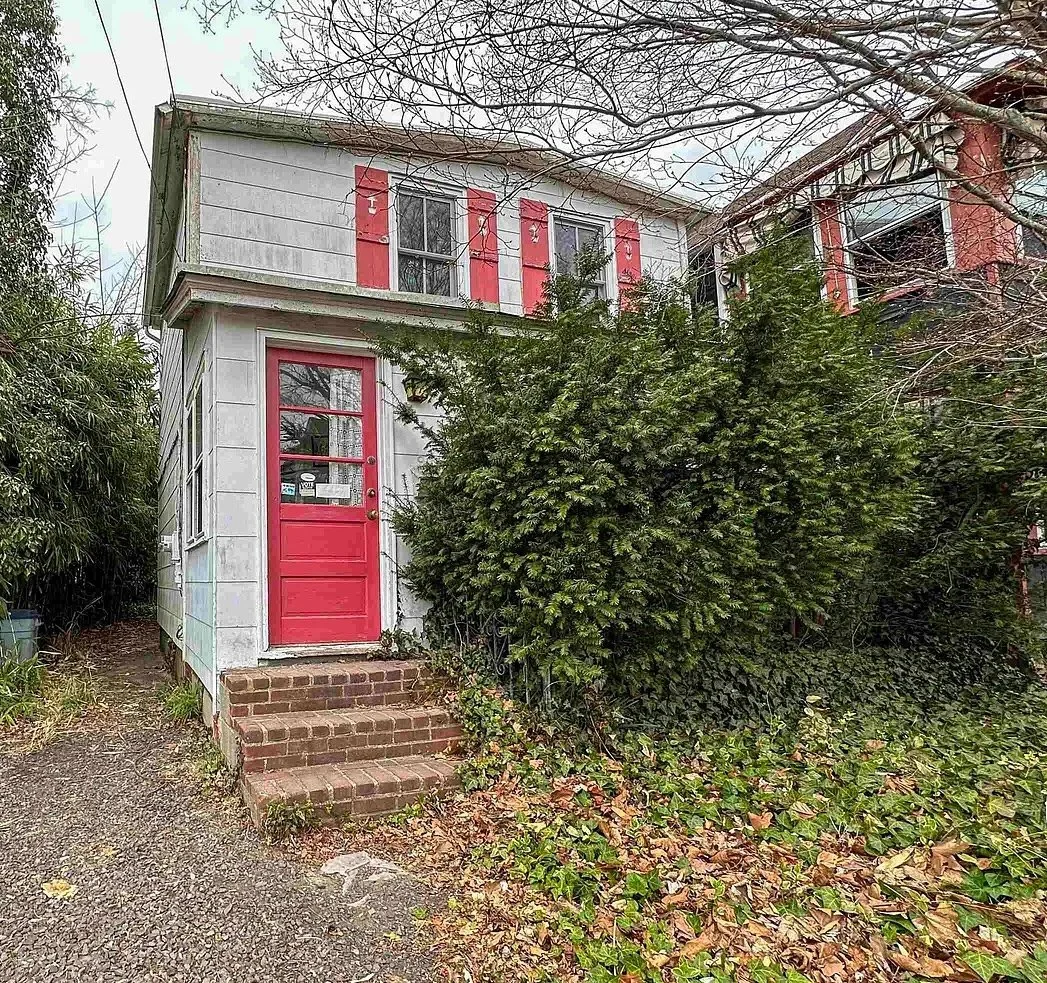
Corgie Street was next, and this is a 2025 photo. By this point, we have 6-children and 2-adults living here
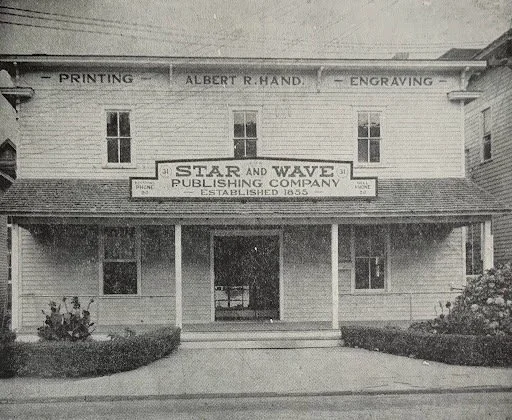
The Star & Wave sold for 7¢ - and I earned 2.5¢ per paper...so my goal was always 40-papers peddled to vacationers.
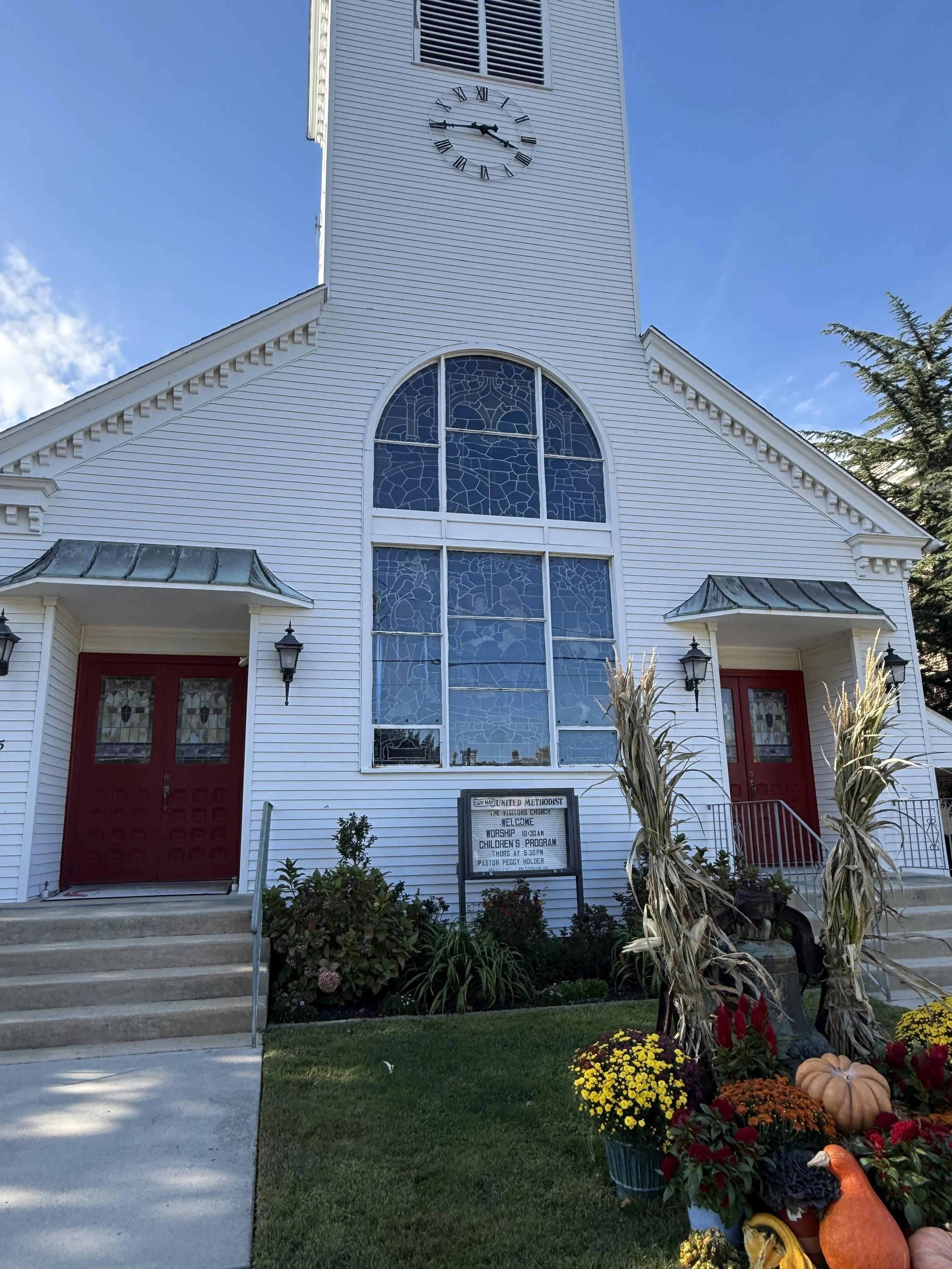
Our folks dropped us off at the First Methodist Church, where I was also in the Choir and Alter Boy.
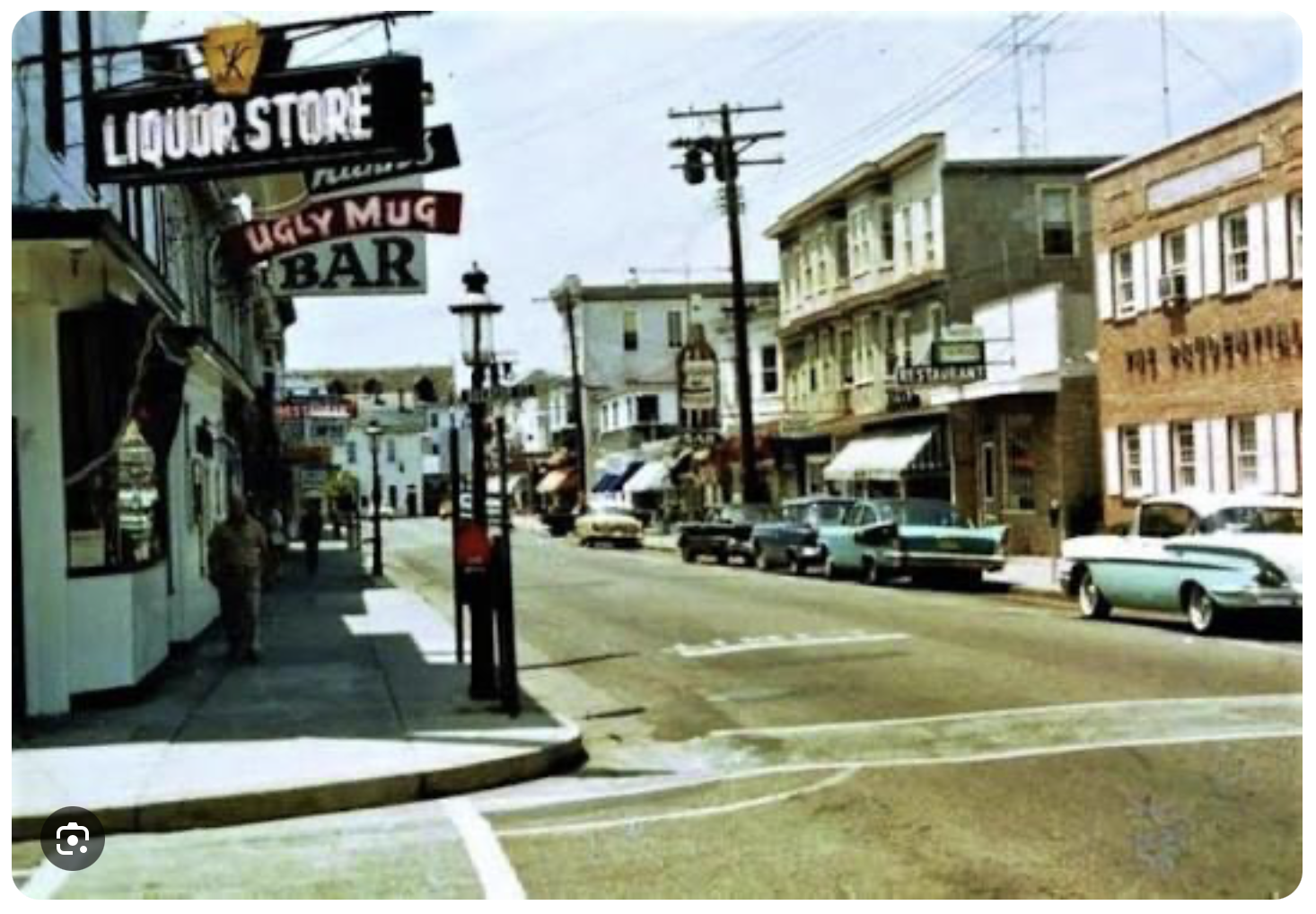
Downtown Cape May was Washington St where small shops, restaurants, and bars flourished. The Ugly Mug still stands today
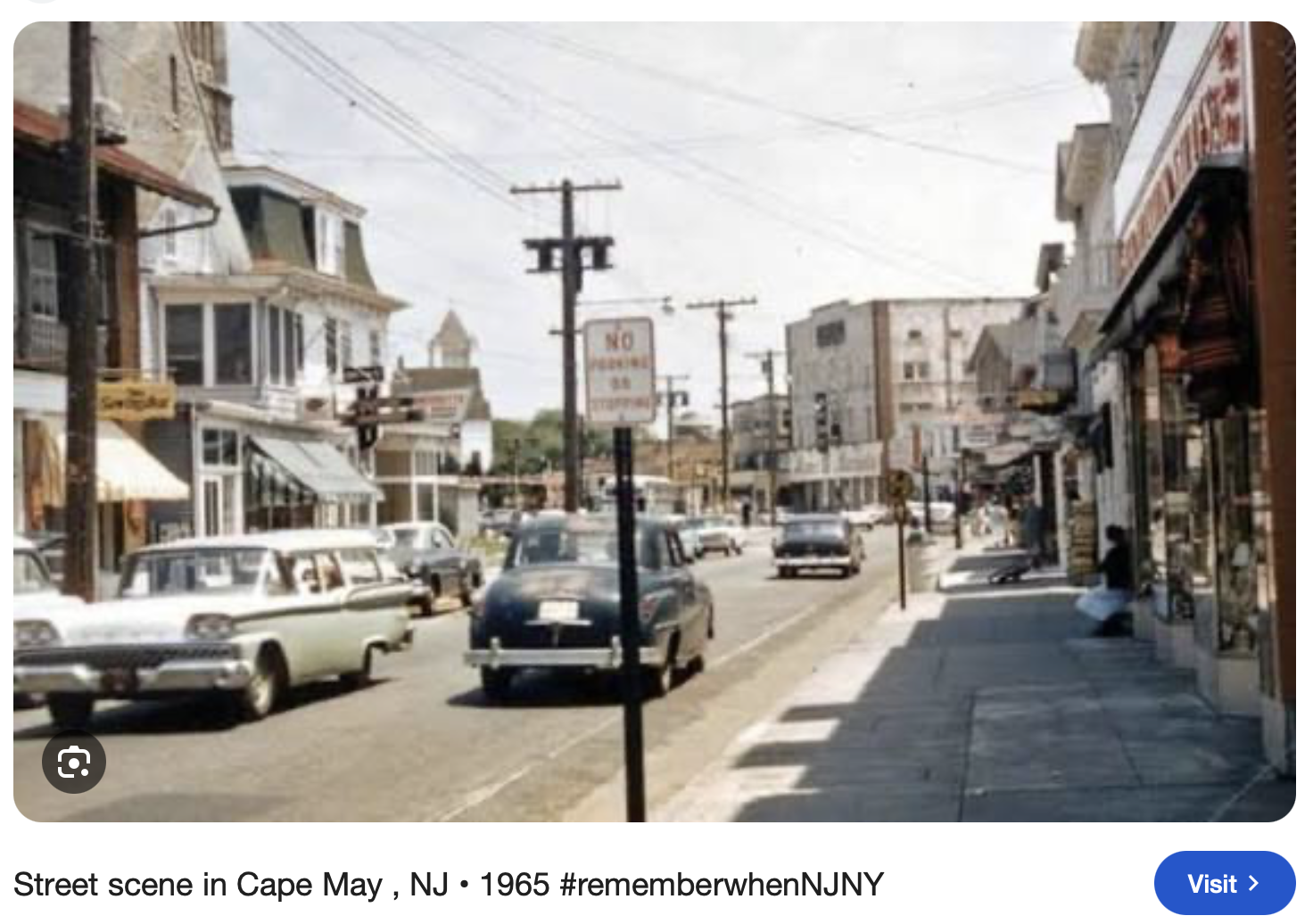
Washington Street shops
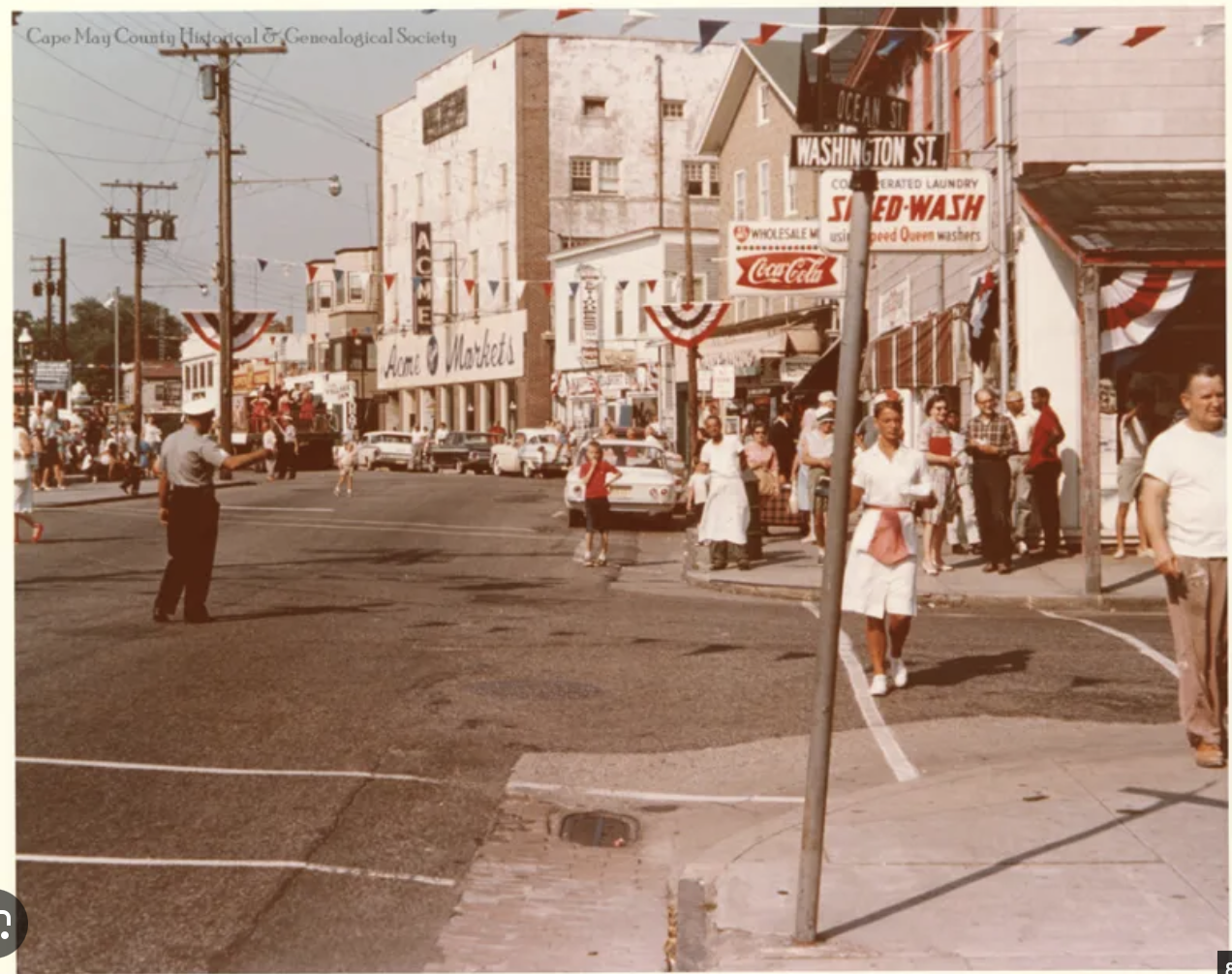
In the back of the photo was the Acme Market, dad's main job in 1955 Cape May. Produce Market